
THE MIDLIFE MUSCLE COMEBACK
Why Training Like Your 25-Year-Old Self Is Holding You Back
One of the biggest mistakes men make when trying to get back in shape is assuming they need to train the way they used to.
The logic seems sound:
"I was in great shape at 28."
"I trained six days per week."
"I smashed every session."
"So that's what I need to do again."
Unfortunately, that's often the exact approach that leads to injury, burnout, frustration, or simply giving up.
The good news?
Getting back into great shape in your 40s, 50s and beyond is often easier than most people think.
You just need a different strategy.
Muscle Memory Is Real

If you've built muscle before, your body has a huge advantage.
When muscle is built, the muscle fibres gain additional nuclei that help support growth. Research suggests that these remain even after muscle has been lost.
In simple terms:
Your body remembers the gainz.
This means that regaining muscle is often significantly faster than building it for the first time.
You do not need to earn every KG of muscle back from scratch.
Many men are surprised by how quickly strength, muscle tone and confidence begin to return once they start training consistently again.
More Training Isn't Always Better
Most men returning to exercise dramatically overestimate how much training they need.
They remember:
Two-hour gym sessions
*Personally I remember these fondly, and the 3 day DOMS as some sort of maligned badge of honour to earn….Training six days per week
Endless cardio
What they forget is that they were also:
Sleeping more
Recovering faster
Carrying fewer injuries
Dealing with less responsibility
Experiencing higher natural testosterone levels
Your body doesn't recover in isolation.
It recovers within the context of your life.
I'd also like to point out that deficits in these behaviours aren’t all compulsory realities of ageing. Most can be mitigated and managed through the 30’s, 40s and 50’s. what I’m saying is that sadly for most people – largely due to how our lives and societies are structured– these are the reality.
Here’s more on why:
Your Recovery Capacity Has Changed
By your 40s and 50s, life often looks very different.
You may now have:
A demanding career
Financial responsibilities
Children
Ageing parents
Less sleep
More psychological stress
More accumulated wear and tear
All of these factors compete for the same recovery resources.
The workout itself is not what makes you stronger- nor are the DOMS (Delayed Onset Muscle Soreness) , something many men and women find hard to believe.
Recovery from the workout is.
Many men don't have a training problem.
They have a recovery problem.
Respect Your Mileage
Ageing doesn't mean becoming fragile.
Far from it.
Some of the strongest, fittest clients I've worked with are in their 40s, 50s, and even 60s.
However, ignoring decades of accumulated mileage is rarely a winning strategy.
Old shoulder issues.
A stiff lower back.
A grumbling knee.
A desk bound 9 to 5.
Reduced mobility.
These things don't necessarily stop progress, but they do need to be respected.
Training should challenge your body, not constantly fight against it.
Don’t Neglect Mobility
This is something I wish I’d appreciated much earlier in my career. I’d love to tell you I was teaching mobility from day one as a physiotherapist, but I wasn’t. I learned its value the hard way.
There is plenty of debate online about whether mobility drills and muscle activation before training actually improve strength or muscle growth. The research is mixed, and if your only measure of success is how much weight you lift or how much muscle you build, the benefits aren’t always obvious.

However, after more than two decades as both a physiotherapist and strength coach, I wouldn’t train without them, and neither do my PRIMEBODY clients.
As we get older, we spend more time sitting, move through smaller ranges of motion and gradually lose access to positions that once felt effortless. Good mobility work helps prepare your joints and muscles to move through their available range before you start loading them.
One of the often-overlooked benefits is proprioception—your brain’s internal map of where your body is in space. Mobility drills give your nervous system valuable feedback, helping improve movement awareness, coordination and confidence under load. If you’ve ever felt stiff for the first few sets of an exercise but much smoother afterwards, you’ve experienced this effect.
It’s also worth remembering that one of the best ways to improve long-term mobility is to perform resistance exercises through a full, controlled range of motion. Mobility drills don’t replace strength training—they prepare you to get more out of it.
That’s why mobility before every training session is compulsory in all of my PRIMEBODY programmes. It only takes a few minutes, but it helps ensure you’re moving well before asking your body to produce force. Over months and years, those few minutes can make a remarkable difference to how you move, how you train and how resilient your body remains.
The Hidden Hormone Factor
Testosterone naturally declines with age for many men.
Not dramatically overnight, but gradually over time.
Combine this with:
Increased body fat
Poor sleep
Alcohol intake
Chronic stress
Reduced activity levels
And recovery becomes even harder.
This doesn't mean hormones are an excuse.
It means your training must be smarter.
The men who achieve the best long-term results aren't always those who train the hardest.
They're often the ones who recover the best.
*I get all my male PRIMEBODY clients to test their sex hormones once or twice a year so we understand the playing field we are working on and can make sure we are maximising the return on everything we do in the gym.
Of course, testosterone influences far more than just your physique. It also plays an important role in mood, energy, libido, sexual function, and overall well-being. Once a baseline has been established, repeat testing can also be a useful marker to indicate whether a person is overtraining or, more accurately, underrecovering. If you want to get yours checked, I recommend using MANUAL with the code PRIMEBODY for a discount.
It's a really easy-to-use home testing kit.
The Minimum Effective Dose
One of the most powerful lessons in fitness is understanding that progress doesn't require maximum effort.
It requires the right amount of effort.
Many men can achieve remarkable results from:
3-4 well-designed sessions per week
Progressive strength training *
Daily walking
Adequate protein
Better sleep
That's it.
Consistency beats intensity.
Every time.
*An important caveat—one that becomes increasingly relevant the longer you've been training—is that progressive overload does not need to, and in fact should not, be applied to every workout or every exercise.
The Goal Isn't To Get Fit For Six Weeks
Anyone can suffer through a short burst of motivation.
The real challenge is creating a physique and lifestyle you can maintain.
The question isn't:
"What's the fastest way to get back in shape?"
The question is:
"What approach could I still be doing two years from now?"
Because the programme you can sustain will always outperform the programme you abandon.
Final Thought
You don't need to train like your younger self.
You need to train like the strongest, healthiest version of yourself today.
Respect your recovery.
Respect your current lifestyle.
Respect your mileage.
Use muscle memory to your advantage.
And remember:
Your comeback doesn't need to start with doing more.
It often starts with doing less, but doing it consistently.
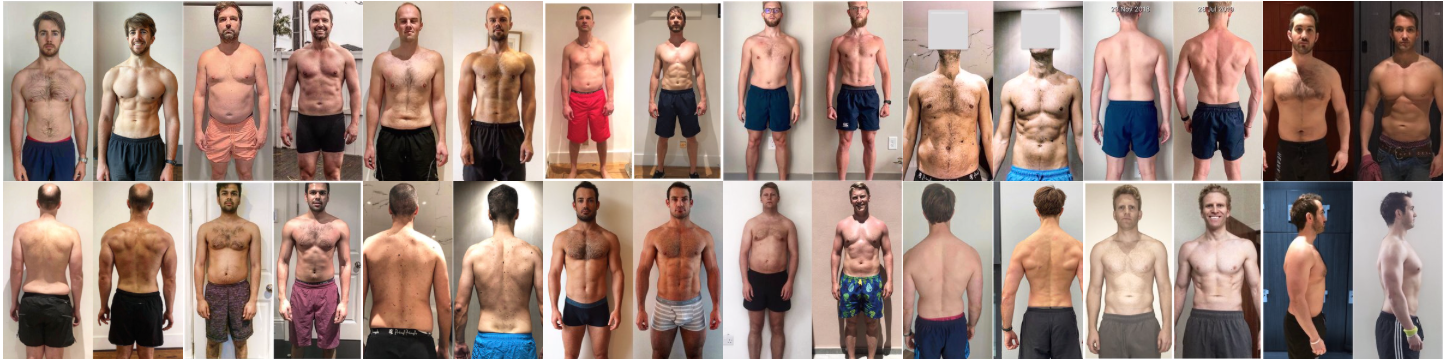
“Need A Second Set Of Eyes?
If you’re trying to get back into shape but you’re not seeing the results you expected, the issue may not be your effort.
It may simply be your strategy.
If you’d like a second set of eyes on your training programme, recovery, nutrition, or overall approach, send me a message.
I’ve spent the last 20 years helping busy men build stronger, leaner, more resilient bodies without living in the gym.
Tell me a little about your goals and current situation, and I’ll point you in the right direction.”